
Prepare Pole Holes Without Striking Buried Lines
Utility Pole Hole Digging in Sparta for installing electrical, telecom, and municipal poles where underground utilities are present near pole sites
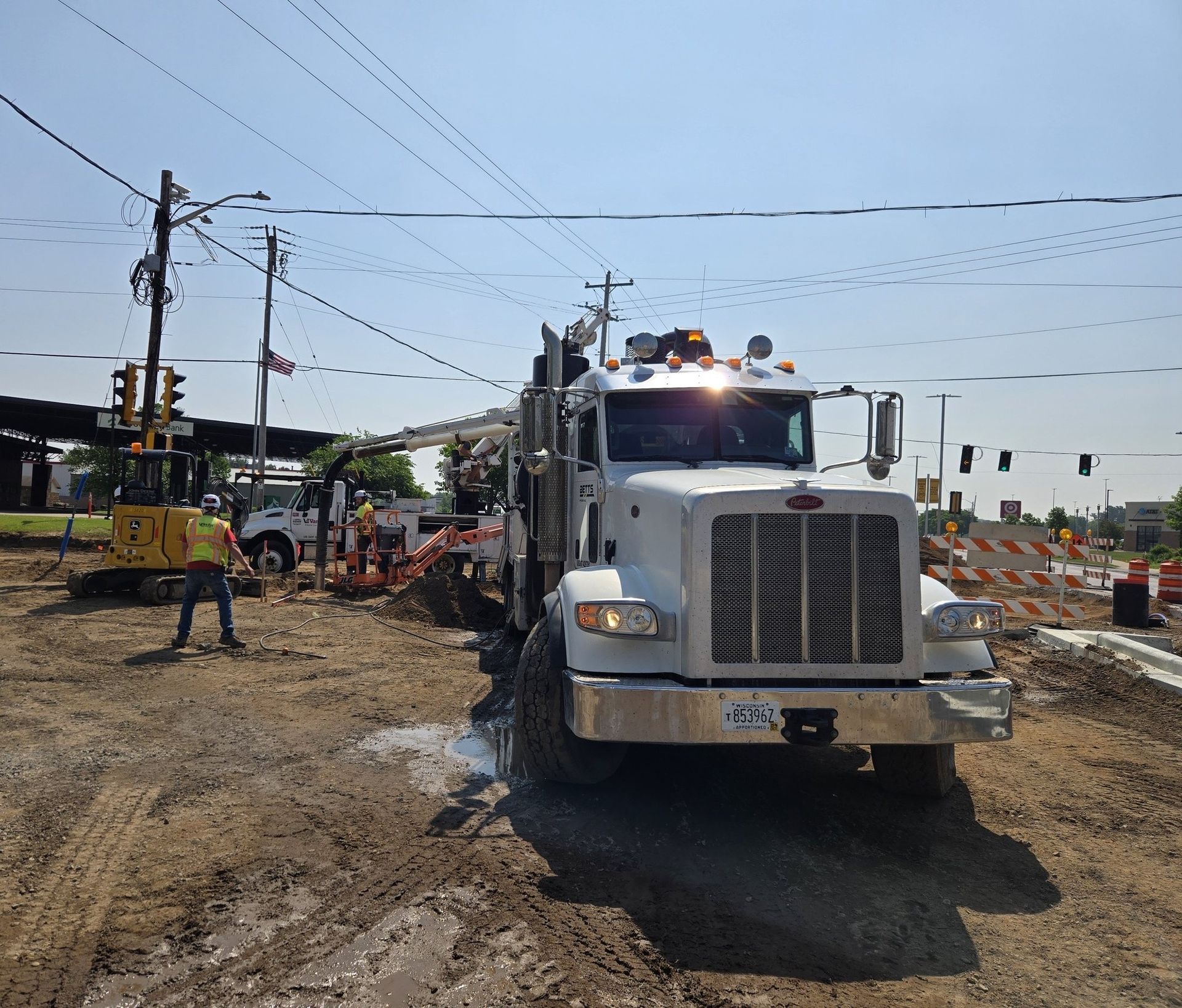
Betts Utility Contractors LLC uses hydrovac excavation to dig holes for new utility pole installations across Sparta, Wisconsin, giving electrical contractors, telecom crews, and municipal utility teams a non-destructive method that protects buried infrastructure while preparing accurate pole holes. When you need to install a new pole near existing water, gas, electrical, or telecom lines, hydrovac technology removes soil with pressurized water and vacuum suction, eliminating the risk of a backhoe bucket tearing through a conduit or rupturing a service line during the dig. You get a clean, round hole to the required depth and diameter, with buried utilities intact and visible if the excavation exposes them.
Utility pole installations often occur in corridors where underground infrastructure is already dense, and mechanical digging creates a high risk of striking buried lines that run parallel to the pole line or cross beneath the installation path. Hydrovac excavation controls the digging process, allowing you to adjust water pressure as you approach known utility depths and stop the excavation when you encounter a line. Sparta's mix of older buried utilities and newer telecom and electrical infrastructure means pole sites may have limited clearance, and hydrovac digging gives you a safer alternative to augers or backhoes that cannot detect a buried conduit until after it is damaged.
If your pole installation project in Sparta requires controlled excavation near buried utilities, request a free quote for hydrovac pole hole digging from licensed and insured operators.
Why Hydrovac Pole Holes Reduce Utility Strikes
You mark the pole location based on engineering plans and utility locates, then the hydrovac crew positions the truck and runs the water wand into the ground at the pole center point, using controlled pressure to break up soil while the vacuum hose pulls the slurry into the debris tank. The excavation proceeds in stages, with the operator adjusting pressure and depth as the hole reaches the target dimensions, typically four to six feet deep and wide enough to accommodate the pole diameter and backfill requirements. If the excavation encounters a buried utility, the crew stops digging, exposes the line safely, and coordinates with the pole installation team to adjust placement or protect the utility during pole setting.
After the hole is complete, you will see a clean excavation with straight walls and a flat bottom, ready for pole placement without the cracked edges or loose soil that mechanical digging often creates. Betts Utility Contractors handles the excavation and debris removal, leaving your crew with a ready-to-use hole and no damage to surrounding infrastructure. The method also reduces the amount of excess soil and ground disturbance, which simplifies backfilling and compaction once the pole is set and braced.
Hydrovac pole hole digging works best on projects where buried utilities are present within five to ten feet of the pole location, where locate marks show congestion, or where mechanical digging would create unacceptable risk. It does not eliminate the need for professional utility locates, but it provides a controlled excavation method that prevents accidental strikes. The service is performed by licensed and insured operators using commercial hydrovac trucks designed for utility and infrastructure support work.
What Utility Crews Ask About Pole Hole Excavation
Electrical contractors, telecom installers, and municipal utility teams in Sparta often ask how hydrovac pole holes compare to mechanical digging, what conditions affect the excavation process, and whether the method works for all pole types.
What pole hole dimensions can hydrovac excavation create for utility installations?
Hydrovac systems routinely dig holes four to six feet deep and twelve to eighteen inches in diameter, which accommodates most standard utility poles, though larger diameters can be excavated if the project requires it.
How does hydrovac pole hole digging prevent damage to buried utilities during excavation?
Water pressure loosens soil without applying the blunt force that causes utility strikes, and the vacuum system removes material before it can collapse back into the hole, giving the operator clear visibility when a buried line is exposed.
When should a contractor use hydrovac instead of an auger for pole hole digging in Sparta?
You use hydrovac when locate marks show buried utilities within the excavation zone, when soil conditions make mechanical digging risky, or when a utility strike would cause service interruption or expensive repairs.
What happens if the hydrovac excavation exposes a buried utility during pole hole digging?
The crew stops excavating, exposes the utility safely, and coordinates with the installation team to adjust the pole location, protect the line during pole setting, or modify the installation plan to avoid conflicts.
Why is hydrovac excavation considered safer than mechanical digging for pole installations near buried infrastructure?
Mechanical augers and backhoes cannot detect buried utilities until contact occurs, while hydrovac excavation uses water and vacuum to remove soil gradually, allowing the operator to identify and expose buried lines without damaging them.
Betts Utility Contractors LLC provides utility pole hole digging for electrical, telecom, and municipal pole installations in Sparta, with free quotes available for contractors who need safe, controlled excavation near buried utilities.