
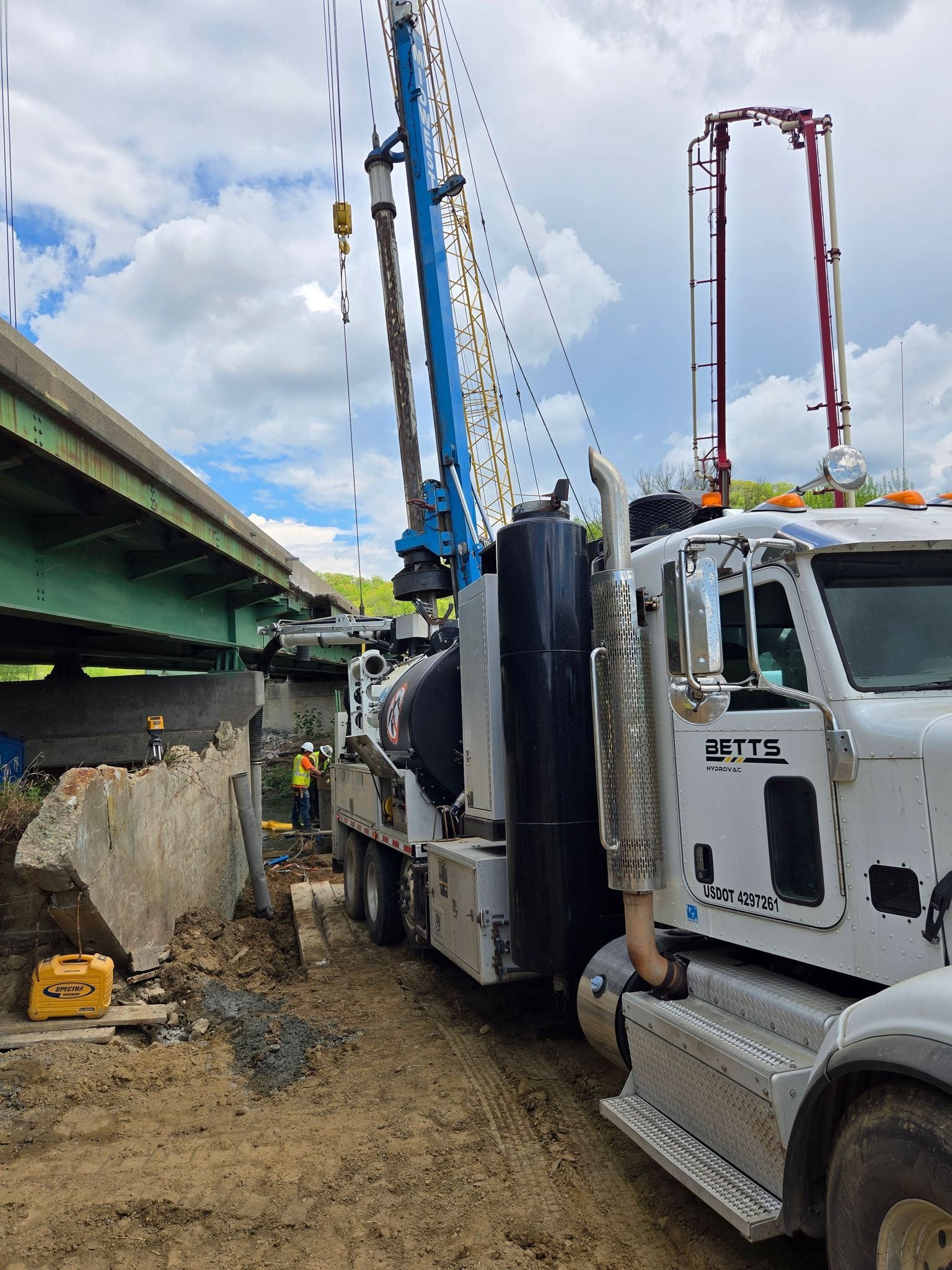
Verify Buried Utility Locations Before You Dig
Daylighting / Potholing in Sparta for exposing underground utilities to confirm depth and placement before trenching or drilling begins
Betts Utility Contractors LLC uses hydrovac technology to expose buried utilities at specific test points across Sparta, Wisconsin, allowing contractors, engineers, and utility crews to verify the exact location, depth, and condition of underground infrastructure before excavation, directional drilling, or construction work continues. When locate marks give you approximate positions but your project requires precise confirmation, daylighting creates a small, controlled excavation that reveals the actual pipe, conduit, or cable without damaging the line or surrounding systems. You avoid the cost of a utility strike, the delays of an emergency shutoff, and the liability that comes with severing active infrastructure.
Daylighting, also called potholing, uses pressurized water to break up soil and a vacuum hose to remove the slurry, leaving the buried utility visible in a narrow column of excavation. This method works when you need to confirm the position of a water main before trenching parallel to it, verify the depth of a gas service before drilling under a roadway, or locate a fiber conduit before installing new underground infrastructure. Sparta's older utility corridors often contain incomplete records, shifted lines, or unmarked laterals, and daylighting gives you a direct view of what is actually in the ground before your crew commits to full-scale digging.
If your project in Sparta requires utility verification before construction, request a free quote for daylighting services from licensed and insured operators.
Why Contractors Use Daylighting for Utility Confirmation
You select test points based on locate marks, project drawings, or site conditions, and the hydrovac crew excavates a pothole at each location to expose the buried utility without disturbing the surrounding area. The water pressure is controlled to avoid damaging coatings or conduit walls, and the vacuum system pulls soil out of the hole as it loosens, giving you a clear view of the utility's position, material type, and depth. Once the line is confirmed, the pothole can be backfilled, or the excavation can be expanded if the project requires immediate access for tie-ins or repairs.
After daylighting is complete, you will see the exact horizontal and vertical location of the utility, which allows engineers to adjust boring paths, trench alignments, or foundation placements to avoid conflicts. Betts Utility Contractors handles the excavation, debris removal, and documentation, so your crew can proceed with accurate information rather than assumptions based on decades-old maps or surface markers that have shifted over time. The process reduces the risk of striking a live gas line, cutting through a telecom conduit, or rupturing a water main during trenching or drilling operations.
Daylighting is most effective on projects where utility conflicts are likely, where locate marks show congestion, or where the cost of a line strike outweighs the expense of verification. It does not eliminate the need for professional locates, but it provides physical confirmation before your equipment enters the ground. The service is performed by licensed and insured operators using commercial hydrovac trucks designed for utility and construction support work.
What Project Managers Ask About Daylighting
Contractors and engineers working on commercial and municipal projects in Sparta often ask how daylighting fits into their workflow, what conditions require it, and how the process affects project timelines.
What is the difference between daylighting and a full hydrovac excavation?
Daylighting exposes a small section of a buried utility for verification purposes, while hydrovac excavation removes soil along a broader area for installation, repair, or infrastructure access.
How many test holes are typically needed to confirm utility locations on a construction site?
The number depends on project size, utility density, and the accuracy of existing locate information, but most projects require one to three potholes per utility corridor to confirm depth and alignment before digging begins.
When should daylighting be performed during the construction schedule?
You perform daylighting after professional locates are complete but before trenching, boring, or drilling operations start, so your crew has verified information when they mobilize heavy equipment.
What size pothole does daylighting create when exposing a buried utility in Sparta?
A typical pothole is twelve to eighteen inches in diameter and deep enough to expose the top of the utility, though size can be adjusted based on the type of line, soil conditions, and project requirements.
Why is hydrovac daylighting safer than digging test holes with a backhoe or hand tools?
Hydrovac technology applies controlled water pressure instead of mechanical force, which prevents accidental cuts, coating damage, or ruptures when the excavation reaches the buried utility.
Betts Utility Contractors LLC provides daylighting and potholing services for commercial construction, utility upgrades, and infrastructure projects in Sparta, with free quotes available for contractors who need to verify buried utility locations before excavation work begins.